English
 Polish

How does bark affect the durability of laminated particleboards? NCBJ's research
14-01-2026
Laminated particleboards are one of the most commonly used materials in the furniture industry. Their durability depends on many factors related, for example, to the near-surface layer. These include the presence of additives such as tree bark, which is sometimes used when other raw materials are not available. In their new study, researchers from NCBJ and SGGW investigated the effect of bark additives on durability and defects during the processing of particleboards.
Modern industrial development places particular emphasis on process automation. However, for it to function properly, it requires stable and precisely defined process parameters and well-known material properties. This also applies to the furniture industry, where laminated wood-based boards are the most commonly used material. Decorative coatings provide excellent protection for particleboards, but their durability largely depends on the quality of the surface to which they are adhered. Heterogeneity in the surface layers of particleboards can cause damage such as cracking, chipping or delamination, especially during mechanical processing.
There are many studies on the durability and performance parameters of tools used for processing boards in the furniture industry (including at NCBJ, which you can read about here). However, the impact of the durability of joints and the quality of the outer layers of boards on the parameters of further processes has not yet been clearly defined. This applies in particular to milling, during which material damage may occur. Computer simulations using the finite element method (FEM) indicate that the structural properties of the particleboard layers closest to the surface may be responsible for the damage. However, experimental verification is needed to confirm the effects detected by numerical simulations.
The results of such a study, conducted as part of a long-term collaboration between scientists from the National Centre for Nuclear Research and the Warsaw University of Life Sciences, have just been published in the journal Coatings. It is worth noting that Łukasz Adamik, MSc, PhD student at the Warsaw University of Life Sciences, who works at Nowy Styl, a European leader in the production of comprehensive furniture solutions for offices and public spaces, also participated in the research. Mr Adamik's participation indicates the industry's interest in the results of work carried out at Polish research institutions.
The work concerns the analysis of the durability of melamine coatings in particleboards containing wood bark in the outer layer, especially during the milling process. Bark is sometimes used in the production of particle boards when other raw materials are not available. However, due to its structure, it can weaken the layer connecting the substrate with the coating. The researchers decided to investigate how the properties of wood-based boards change with increasing bark content in their composition.
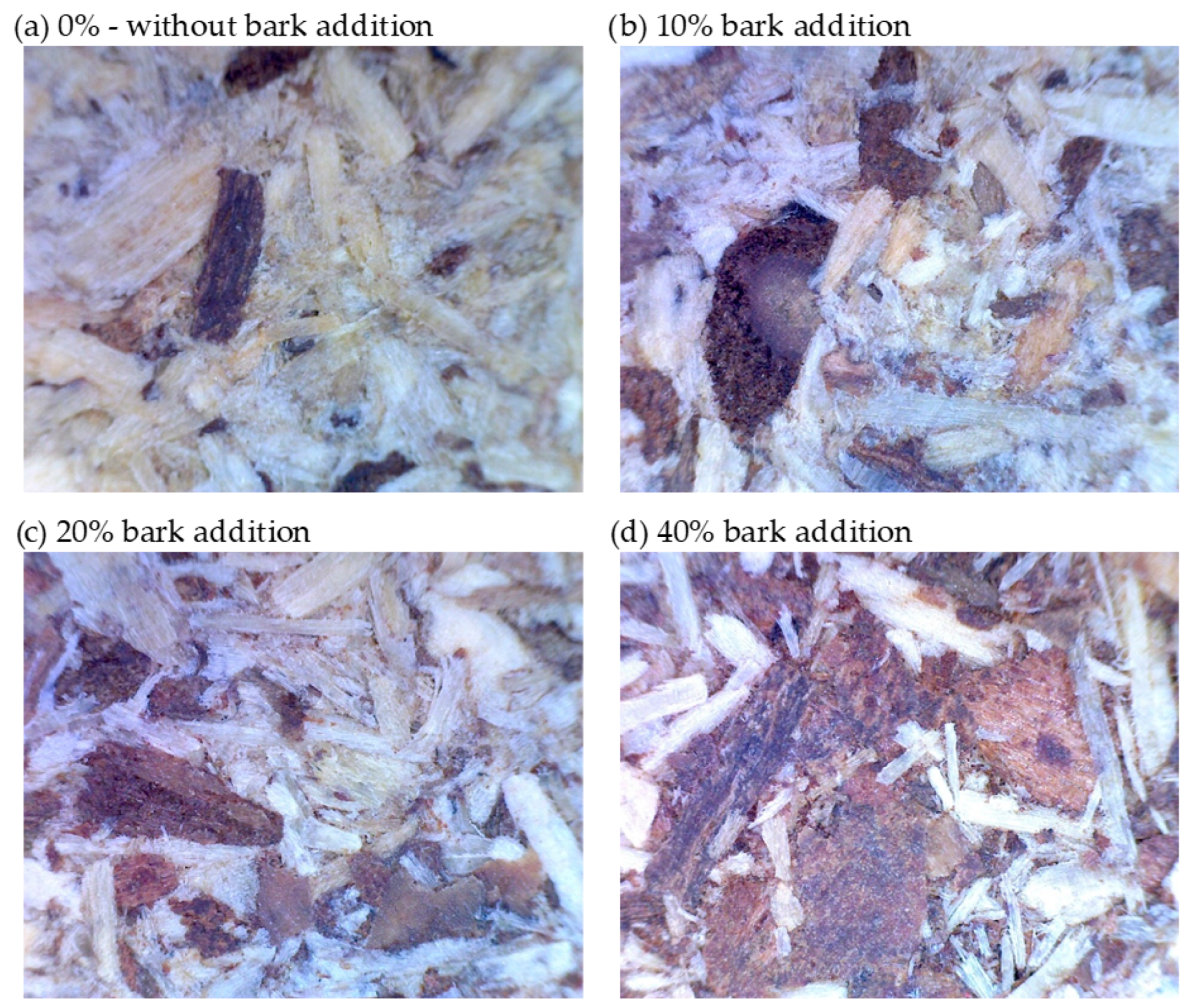
The prepared samples consisted of 10 to 40% tree bark in the surface layers (constituting 35% of the board thickness). They were coated with melamine resin. Two types of laminate were used in the samples – light and dark – to check the effect of the type of coating on the properties of the finished board. The samples prepared in this way were subjected to a series of materials tests, which examined, among other things, their resistance to cracking, deformation, stretching and mechanical damage. The researchers also determined the density profile for all samples, as well as the durability of the bond between the laminate and the wood-based panel. Part of the testing also involved machining the panels by milling to check the degree of edge damage.
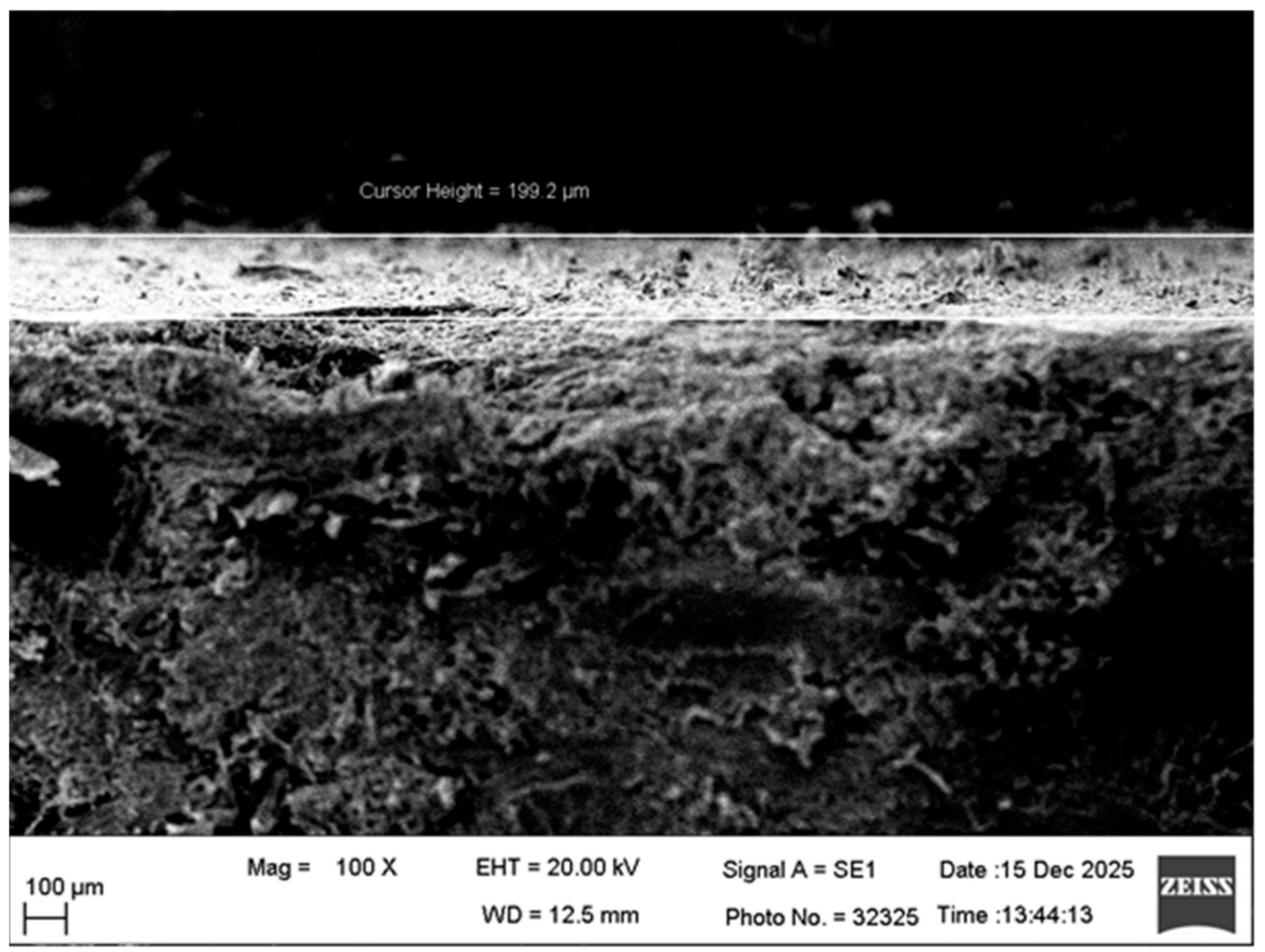
The density profile of wood-based panels is the main factor determining their mechanical properties. All samples tested showed a typical U-shaped profile – the density was significantly higher at the surface (laminate and the layer connecting it to the board). However, the profiles differed depending on the bark content. - The differences in density at the surface compared to classic boards were as high as 500 kg/m³ for samples with 10% bark content. This is due to the properties of the bark itself: its lower density, greater porosity and more irregular shape compared to wood - explains dr inż. Marek Barlak from the Materials Research Laboratory, one of the authors of the publication. The addition of bark also made the wood-based boards less resistant to cracking and deformation, which was particularly evident in samples with the highest bark content. However, although samples containing less tree bark also exhibited poorer properties, the differences were much less pronounced. Analyses also showed that the presence of bark does not affect the strength of the bonds within the board, as confirmed by the similar density of the internal layers in all the boards prepared. The parameter that was visibly affected by the bark content was the durability of the bond between the laminate and the surface layer. The presence of bark caused the formation of areas of lower density, where voids and microcracks occurred. Their presence weakened the bond with the laminate.
Unexpected results were obtained during tests of defects occurring during milling. Samples with a dark laminate coating had up to five times more defects than boards without bark additive, although increasing its content did not cause a significant increase in the frequency of defects. On the other hand, samples with light laminate with low bark content showed less damage than traditional boards. This suggests that the resistance of boards to mechanical processing depends on a number of factors. - Both the presence and content of bark, as well as the type and quality of the laminate, have an impact. What is more, the type and degree of wear of the tools used in processing can also significantly affect the outcome. Our results suggest that in the presence of bark in the surface layers, there are non-obvious mechanisms of damage formation that interact with each other- adds Marek Barlak.
The full results of the study are available in the publication: Adamik, Ł.; Borysiuk, P.; Barlak, M.; Zagórski, J.; Szymanowski, K.; Betlej, I.; Auriga, R. Evaluation of Melamine Coating Integrity on Particleboards Containing Surface Bark Inclusions. Coatings 2026, 16, 103. https://doi.org/10.3390/coatings16010103.