English
 Polish
Our Research
The fourth division (BP4) of The Fundamental Research Department (Departament Badań Podstawowych) deals with research in astrophysics and astronomy, mainly their observational aspects. The BP4 division is located in Warsaw at 7 Pasteura street.
The research conducted at the Astrophysics Laboratory includes:
- Cosmology: CMB, large structures of the Universe, dark matter, non-standard cosmology and gravitational lensing
- Gravitational waves: Multi-messenger astronomy, new tools for cosmology
- Physics of galaxies: Formation and evolution of galaxies, AGN, quasars and gamma-ray burst
- Interstellar medium: Star formation, neutron stars and white dwarfs
The BP4 division is also involved in several international projects. Check our Scientific Projects page for more information.
Seminars
Upcoming seminars for all of NCBJ can be found here.
The seminar archive for NCBJ can be found here.
Latest News
Scroll down for the latest news about the research done by our division or click here.
VISTULA Workshop
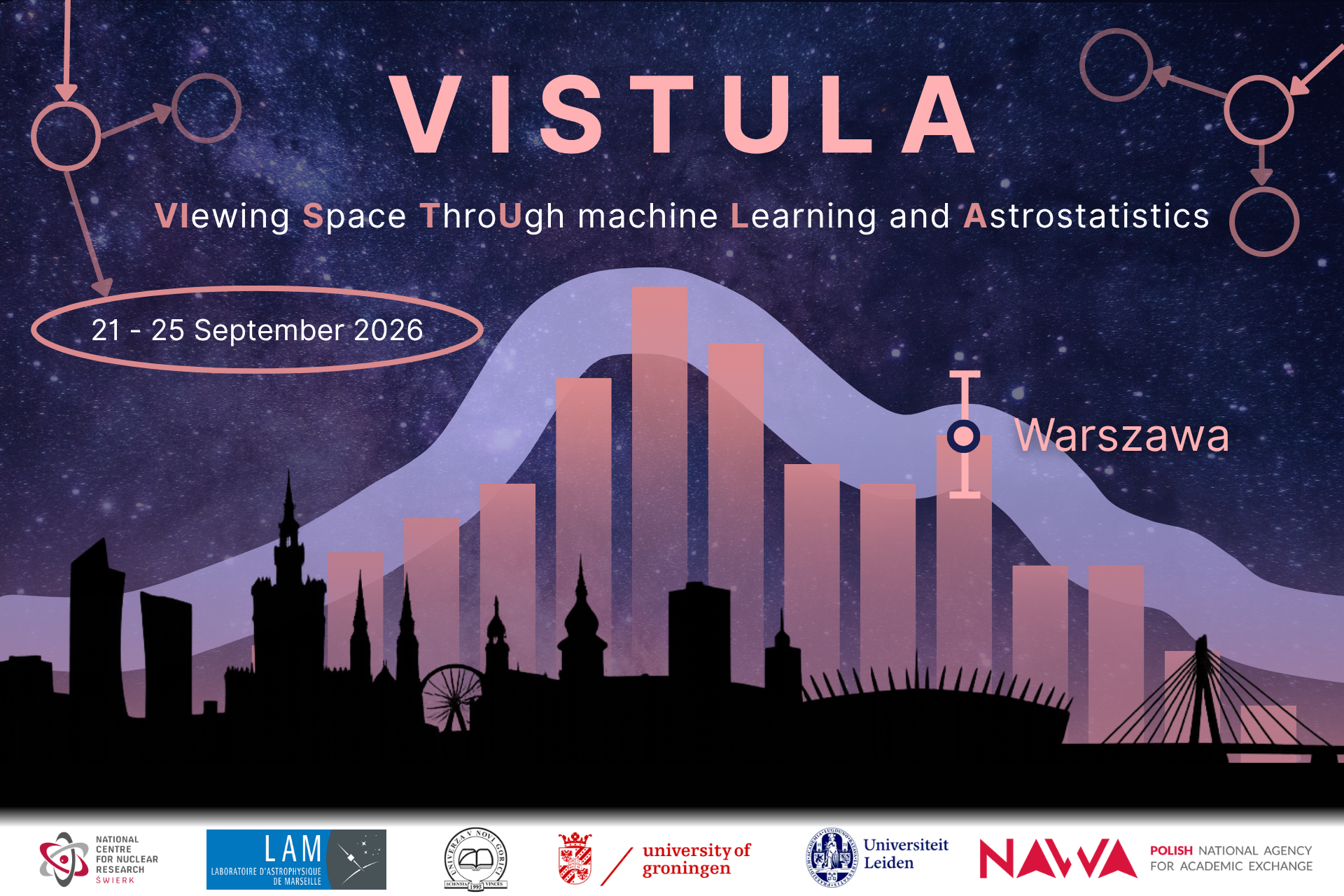
The workshop is organized as part of the project CLEVER: Cosmology & GaLaxy EVolution In The New ObsErving ProgRammes. Project founded by the Strategic Partnership project BPI/PST/2024/1/00019 by NAWA – Polish National Agency For Academic Exchange.
The rationale
Machine learning and modern statistical methods are becoming central tools in astrophysics and cosmology, from survey data reduction and photometric redshifts to time‑domain discovery, image classification and parameter inference. This workshop offers a structured introduction to statistical foundations and machine learning concepts.
The goal of this workshop is to provide a structured, beginner‑friendly entry point to machine learning and advanced statistics in astrophysics, while progressively reaching more advanced topics. The format will combine morning lectures with afternoon hands‑on sessions in which participants work through concrete astrophysical use cases under the guidance of the invited speakers and local tutors.
The workshop is aimed at Master’s students, early‑stage PhD students and junior researchers from NCBJ, the University of Warsaw, and the CLEVER partner institutions. It will explicitly welcome participants with limited prior exposure to machine learning, provided they are comfortable with basic programming (e.g. Python) and standard statistical concepts. By the end of the workshop, participants should be able to: understand the main families of machine learning methods used in current astrophysical research; critically assess when a machine‑learning approach is appropriate; implement and evaluate simple models on real data; and recognise common pitfalls such as overfitting, data leakage and biased training sets.
The invited speakers span a broad range of applications including galaxy formation and evolution, large‑scale surveys, time‑domain and transient astronomy, exoplanets and cosmology.
Hosted in Warsaw as part of the CLEVER-NAWA partnership , the workshop will strengthen training and collaboration across the network by bringing together students, junior researchers, and invited experts for a hands-on introduction to machine learning and advanced statistics in astrophysics.
Invited speakers:
- Ting-Yun Cheng (Kapteyn Astronomical Institute in Groningen)
- Antonio La Marca (Leiden Observatory, European Space Agency)
- Alex Razim (Centre for Astrophysics and Cosmology, Nova Gorica)
- Carlo Schimd (Laboratoire d’Astrophysique de Marseille)
- Will J. Pearson (National Centre for Nuclear Research)
For more info, or to register for the workshop, CLICK HERE
Conference Participation
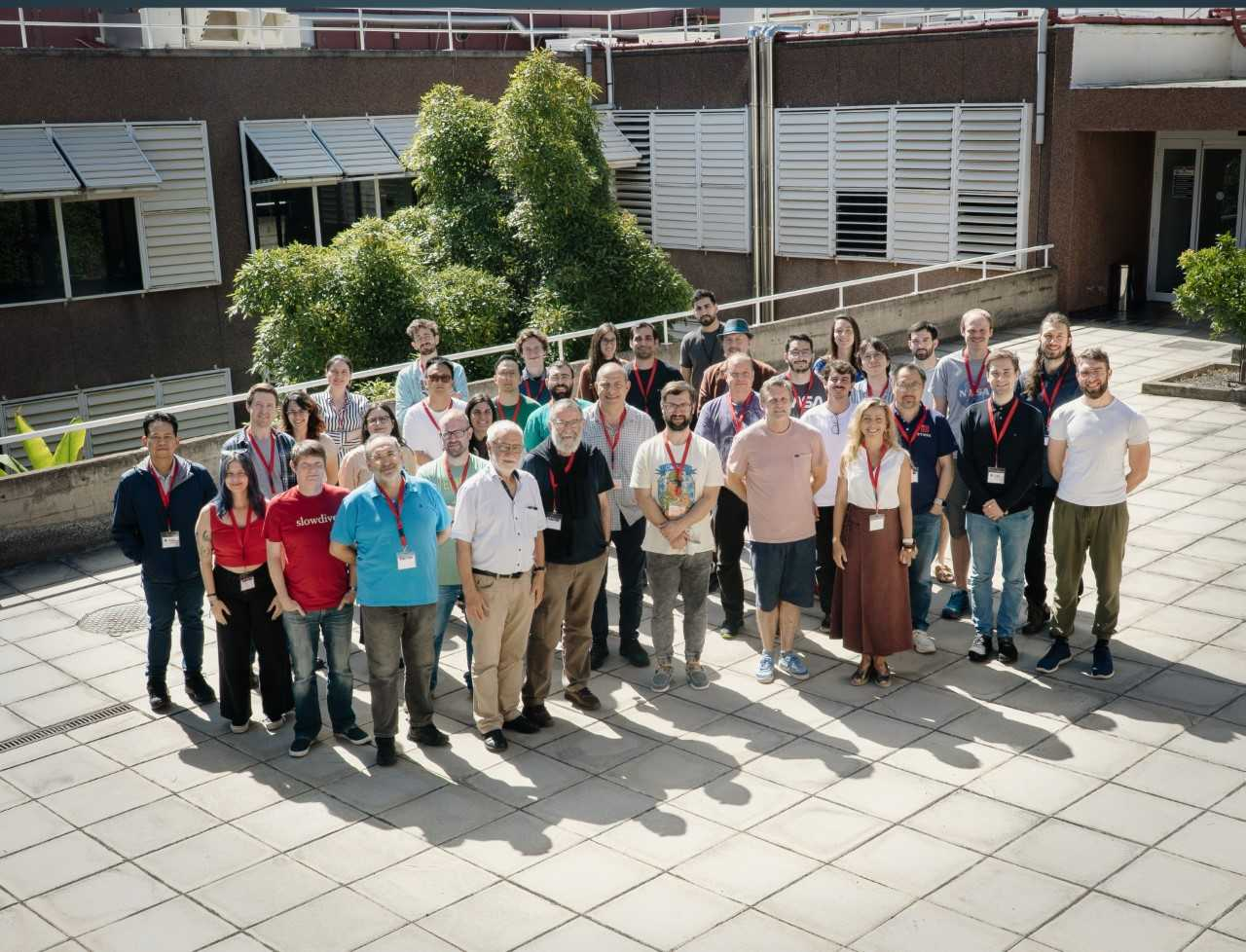
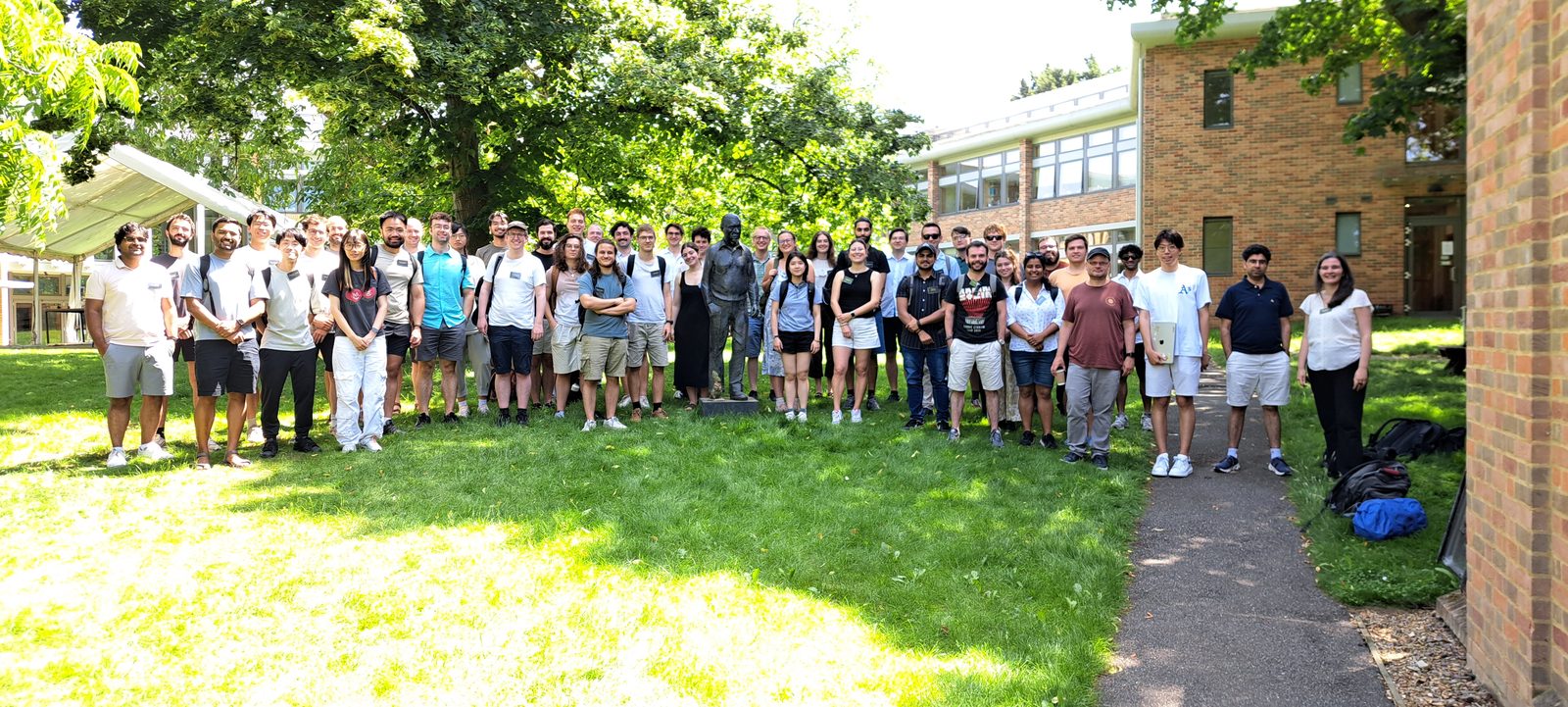
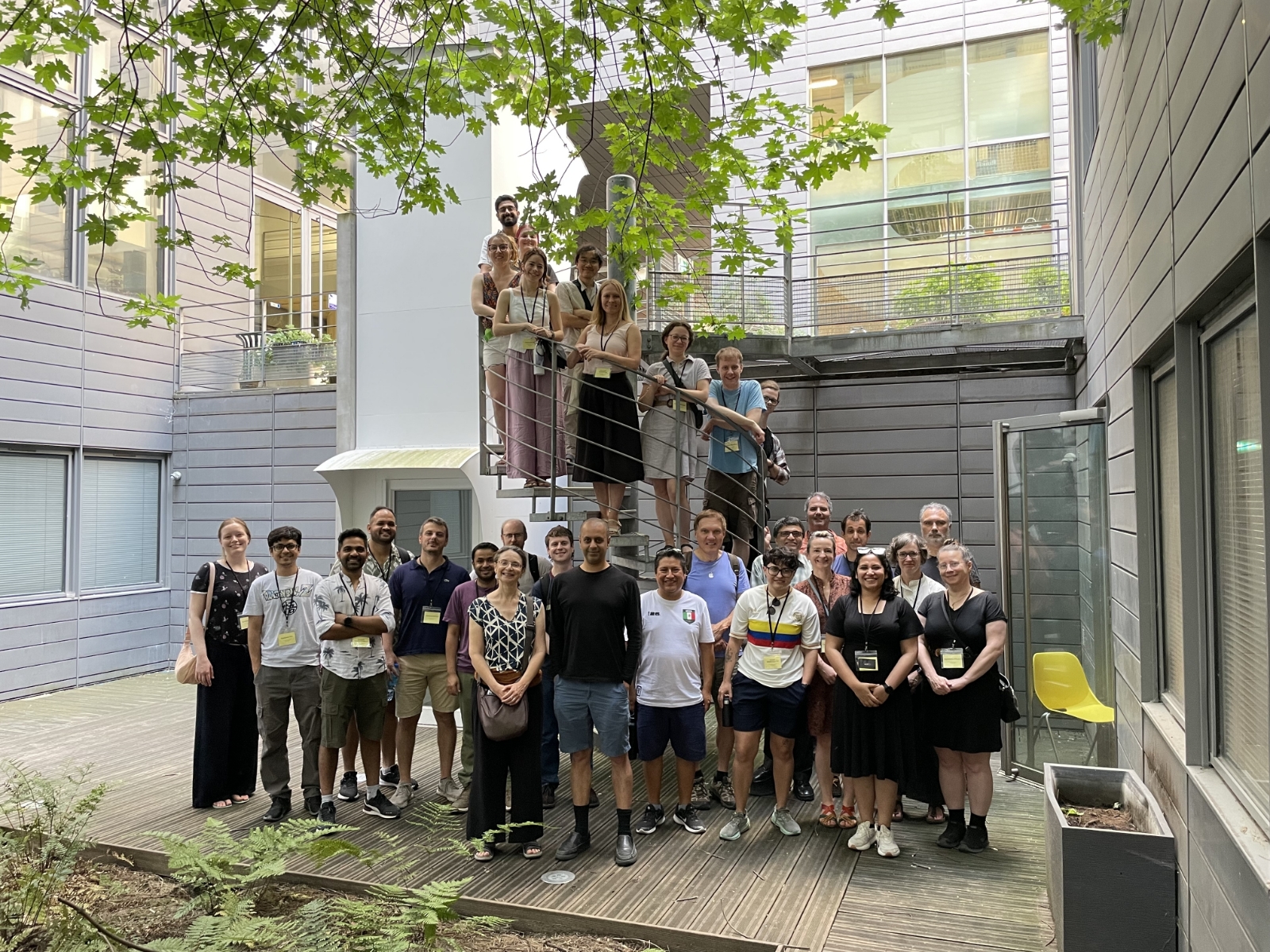
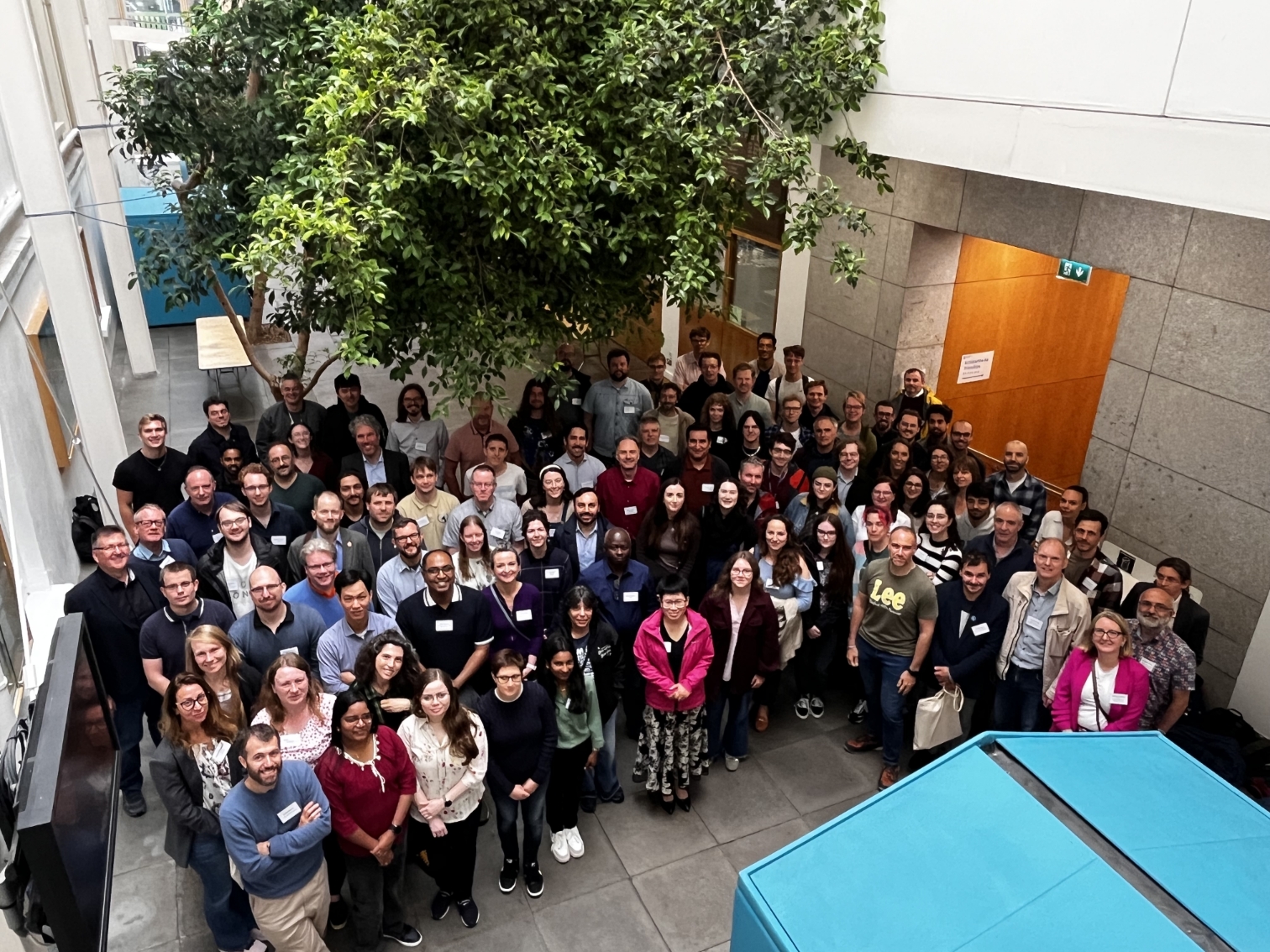
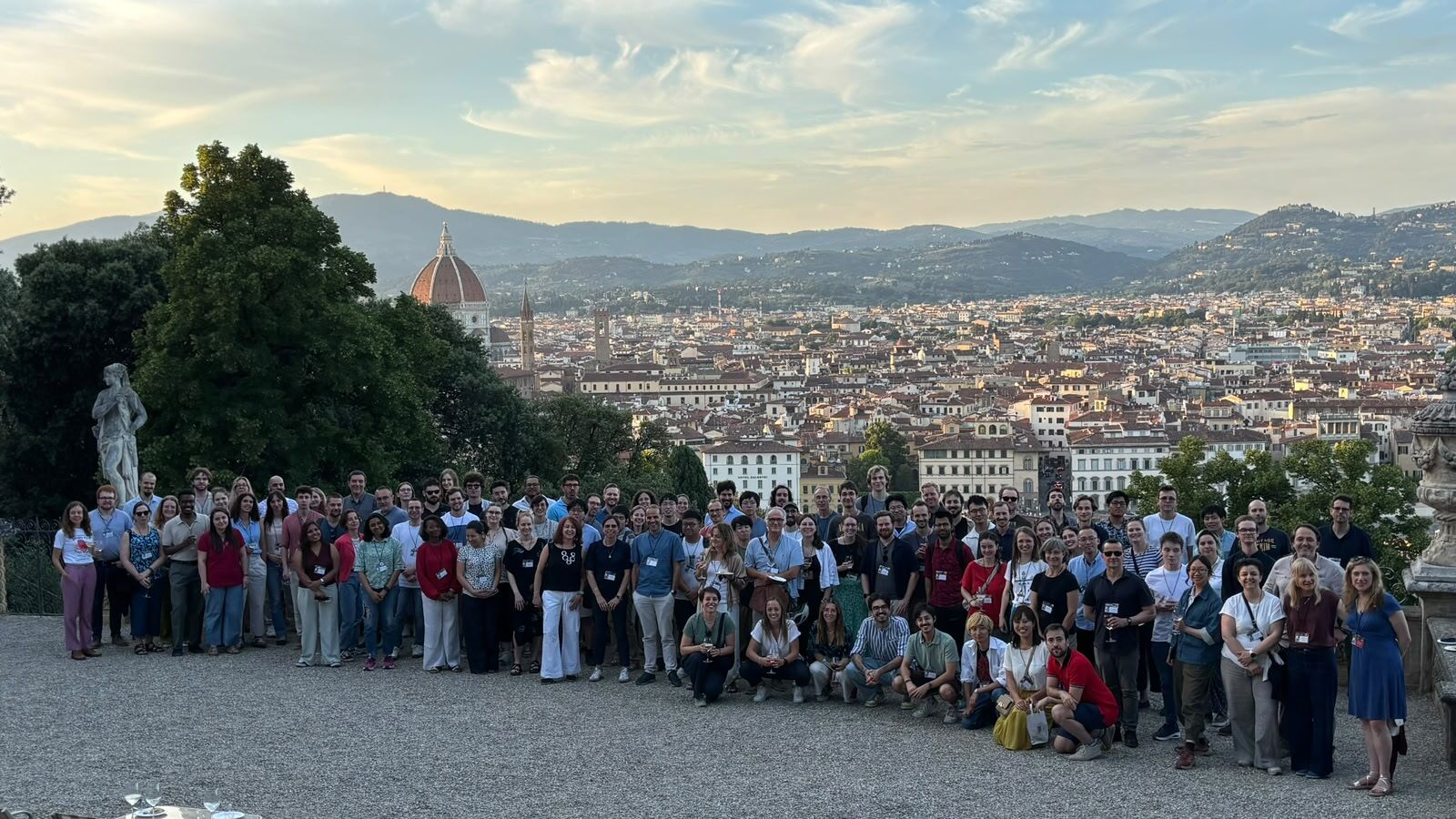
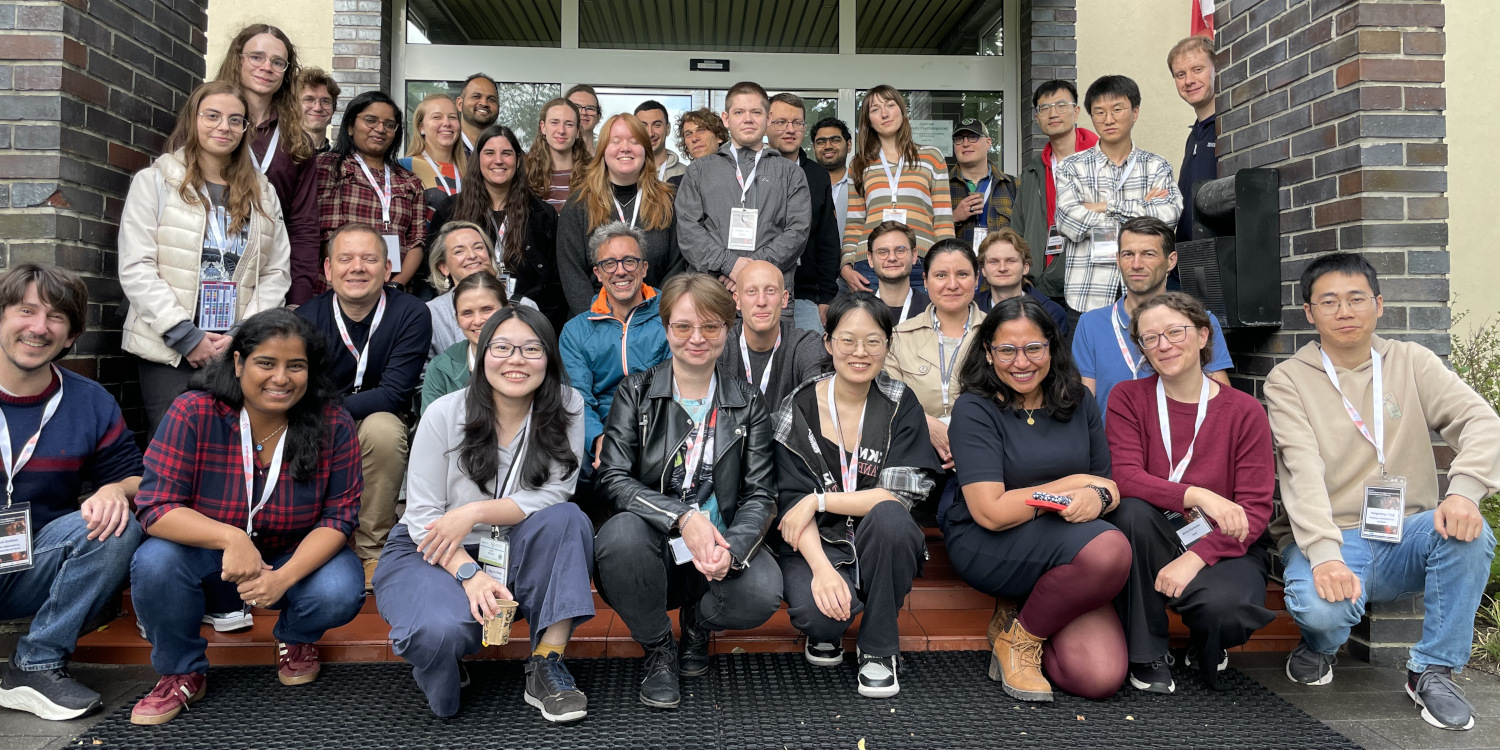
BP4 participate in many national and international conferences. We share our cutting edge research and enthusiasm with other astronomers across the world. Below are pictures from our trips across the globe over the last year or so.
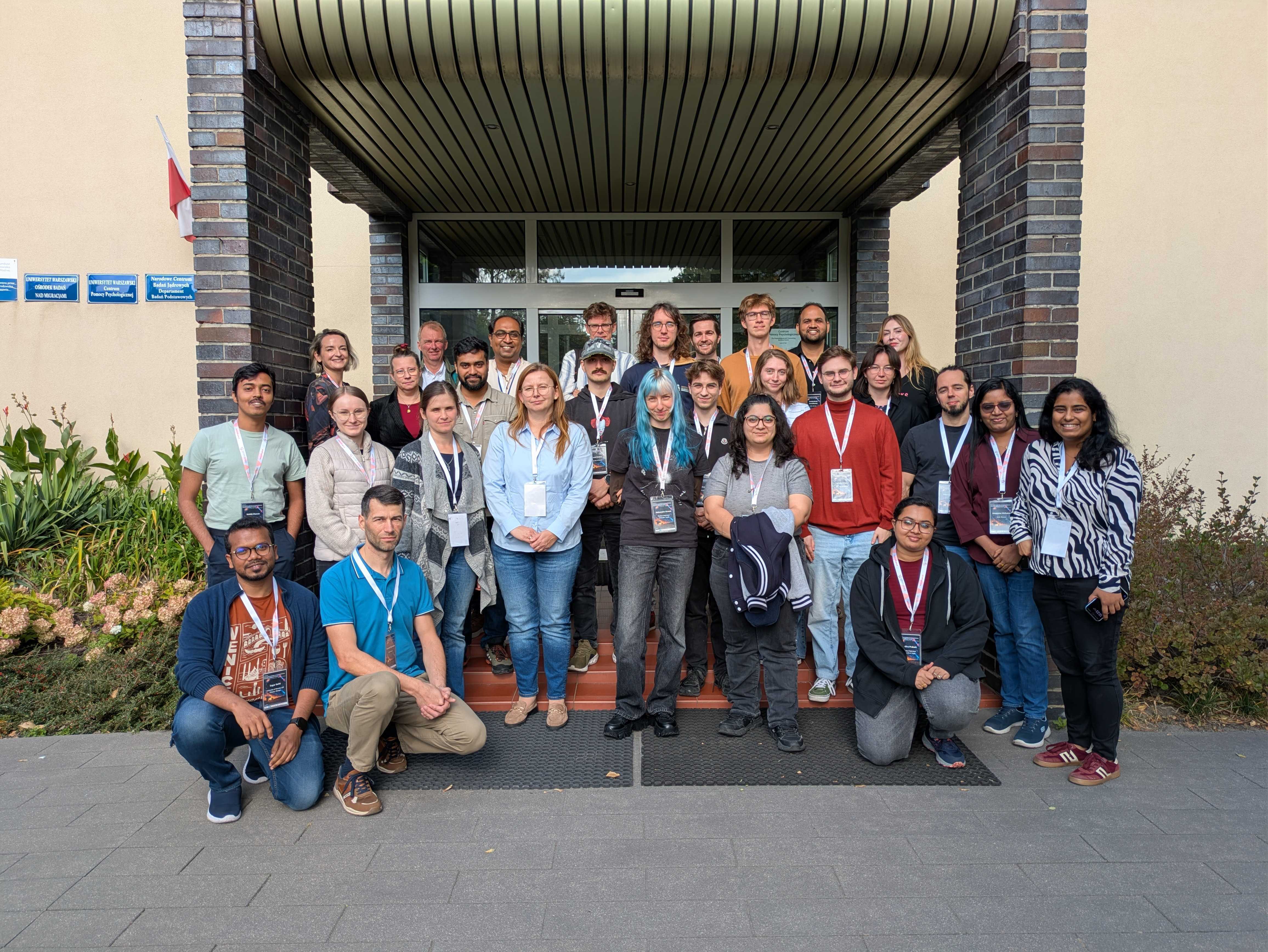
Warsaw, Poland
5-7 October 2026
Organised by NCBJ BP4 as part of CLEVER
Invited Speakers:
Pratik Dabhade and
Katarzyna Małek
SOC members:
Pratik Dabhade and
Katarzyna Małek
LOC members:
Kshitij Chavan,
Subhrata Dey,
Anna Durkalec,
Anupama Mohanan, and
Unnikrishnan Sureshkumar
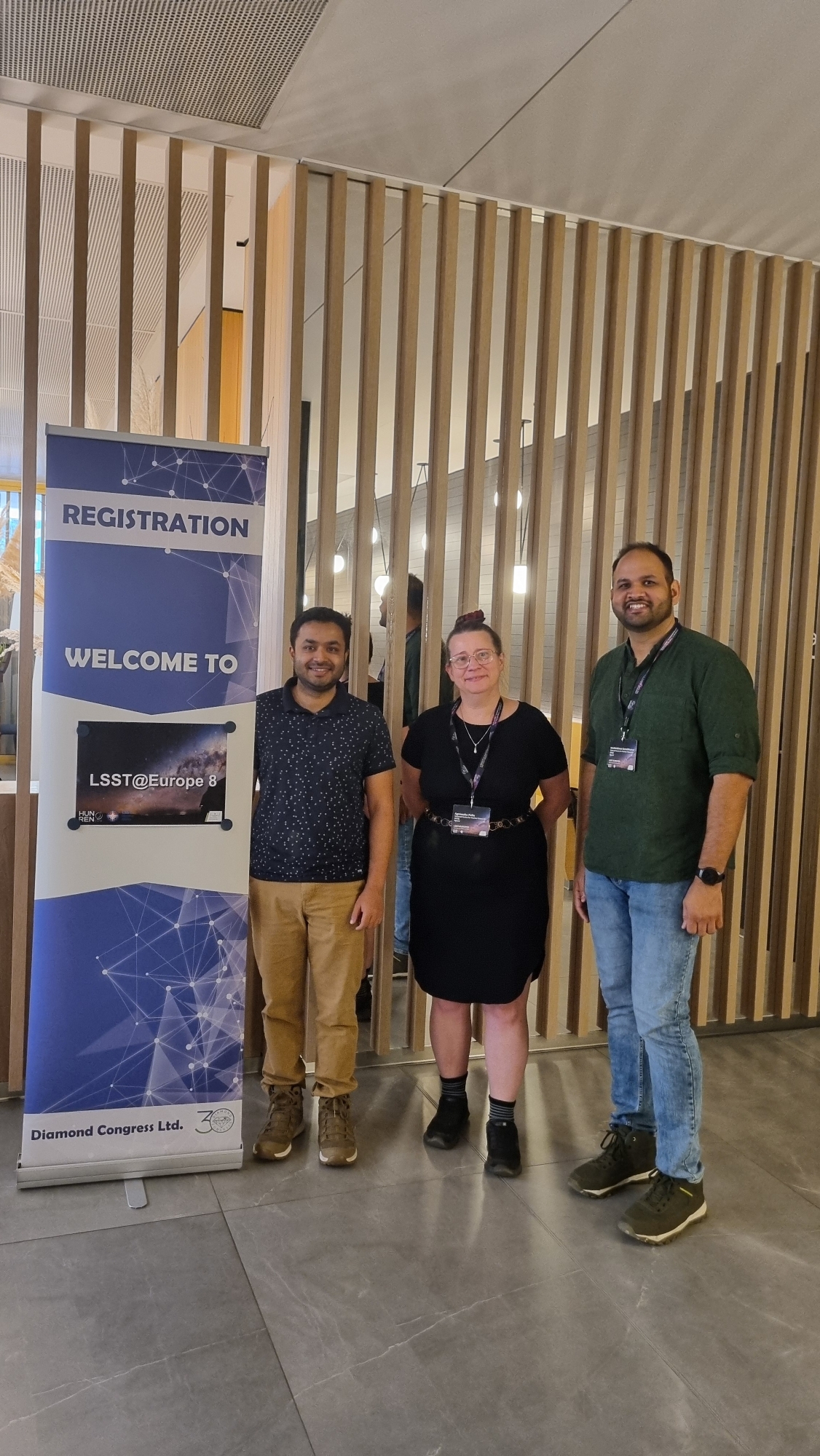
Budapest, Hungary
27 September - 2 October 2026
Warsaw, Poland
21-25 September 2026
Organised by NCBJ BP4 as part of CLEVER
Invited speaker:
William Pearson
SOC members:
Paweł Bielewicz (Chair),
Subhrata Dey,
Miguel Figueira,
Nandini Hazra,
Mariana Jaber,
Katarzyna Małek,
William Pearson, and
Antonio Vanzanella.
LOC members:
Paweł Bielewicz (co-chair),
Nicola Principi Cavaterra,
Aidan Cotter,
Kishan Deka,
Subhrata Dey (co-chair),
Orest Dorosh,
Anna Durkalec,
Paweł Siegmund,
Unnikrishnan Sureshkumar, and
Antonio Vanzanella.
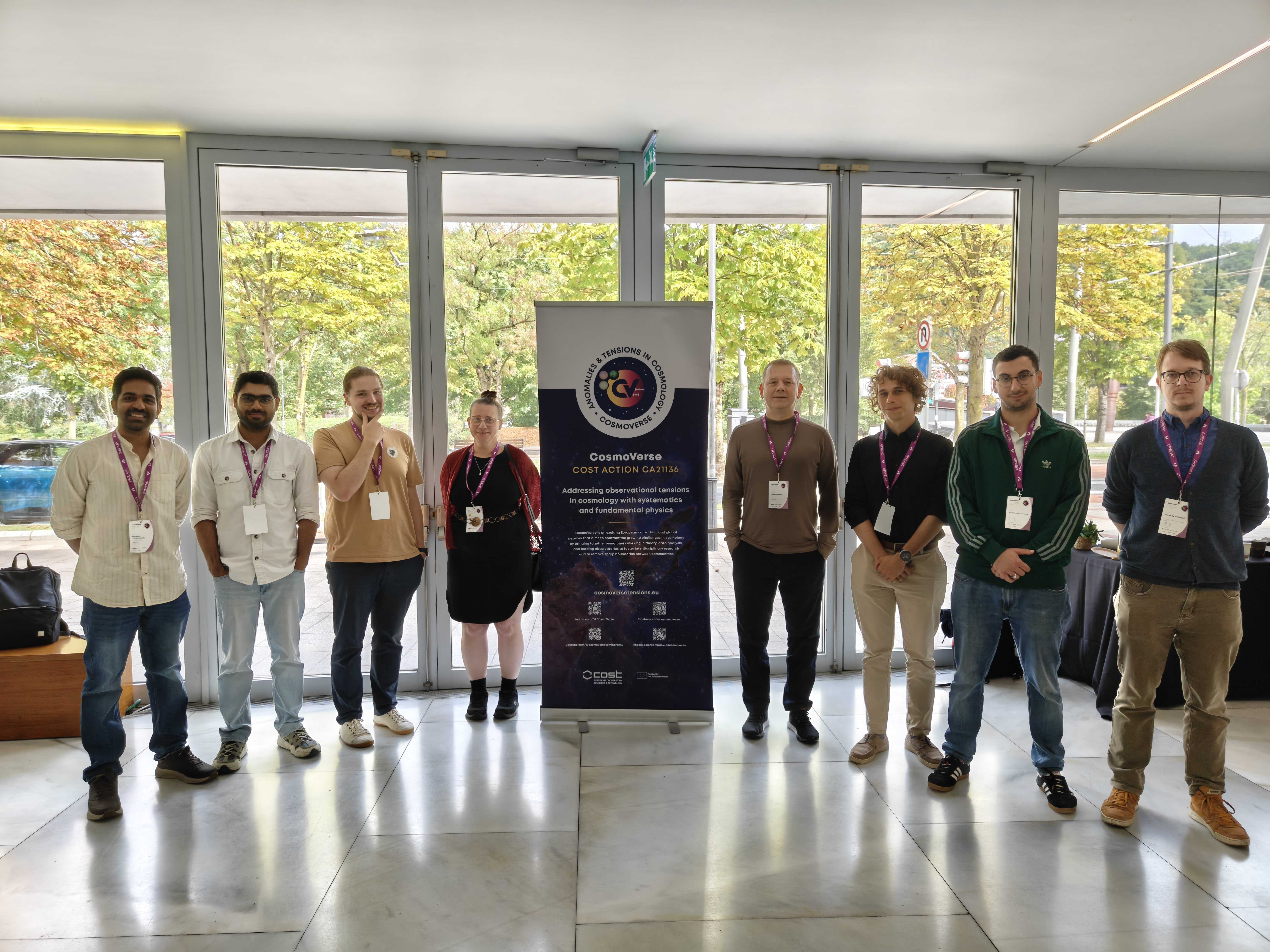
Bilbao, Poland
15-18 September 2026
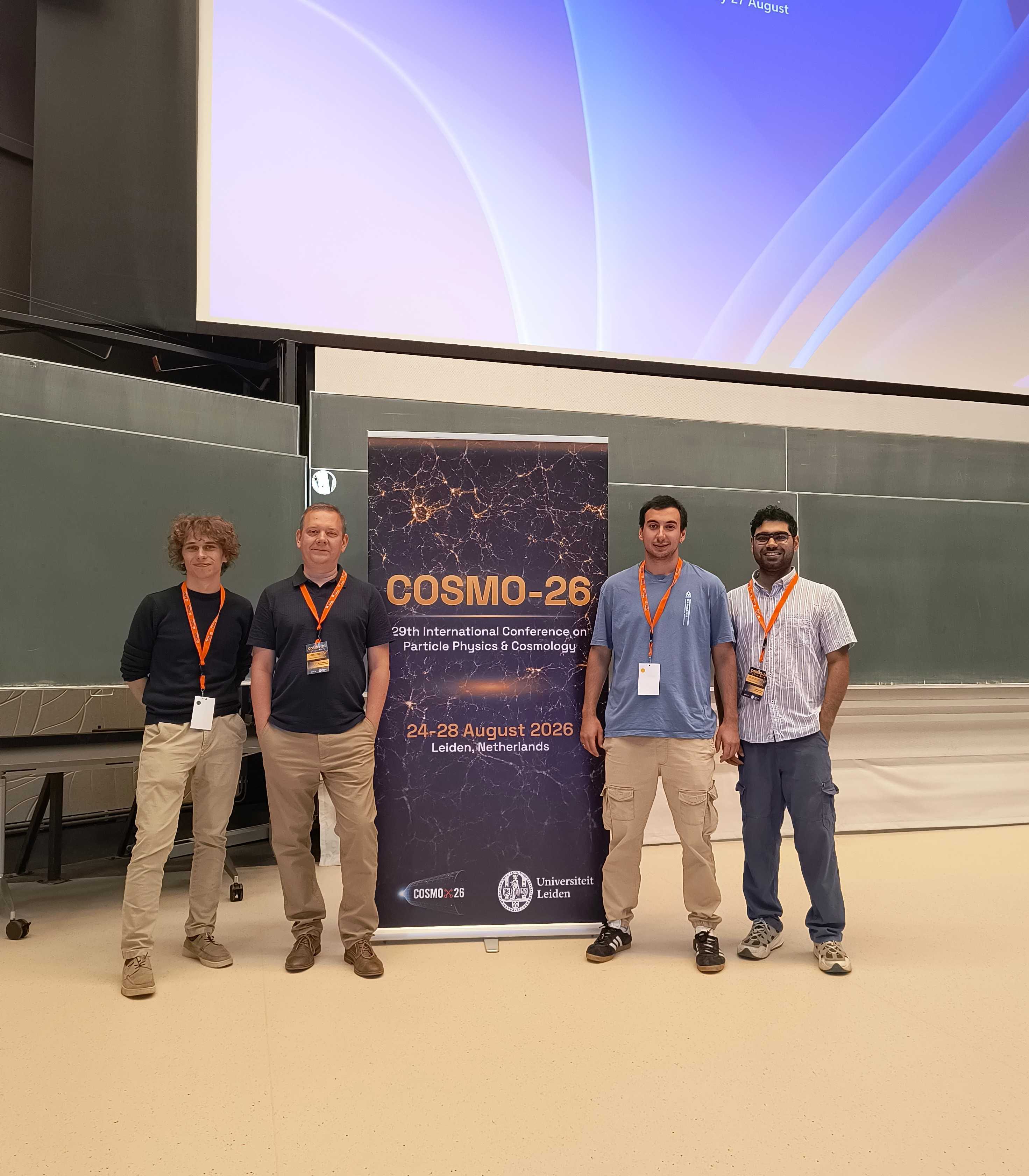
Leiden, The Netherlands
24-28 August 2026
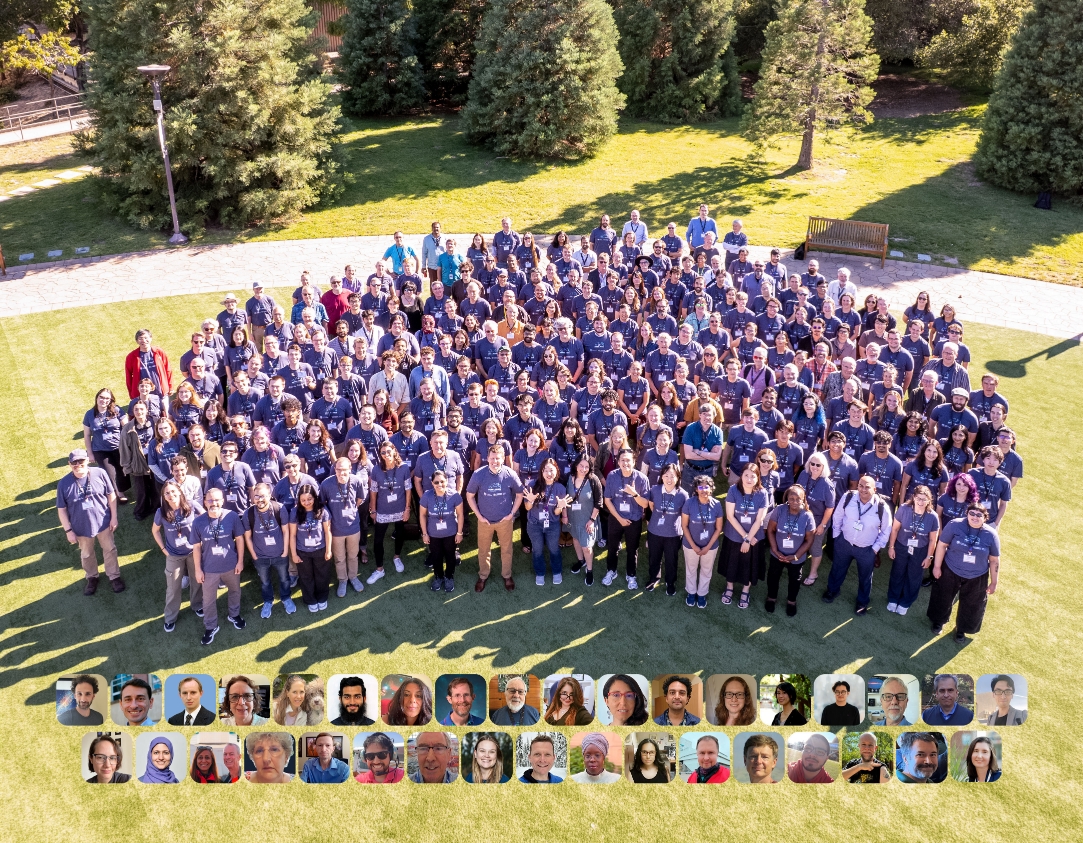
SLAC, Menlo Park, California, USA
27-31 July 2026
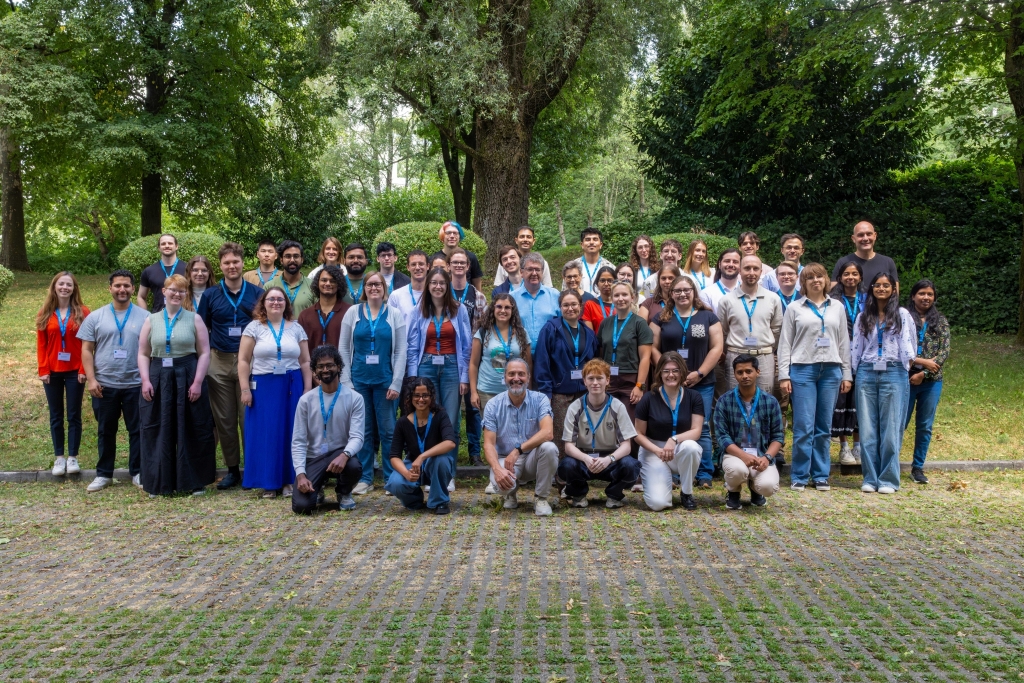
Garching, Germany
20-24 July 2026
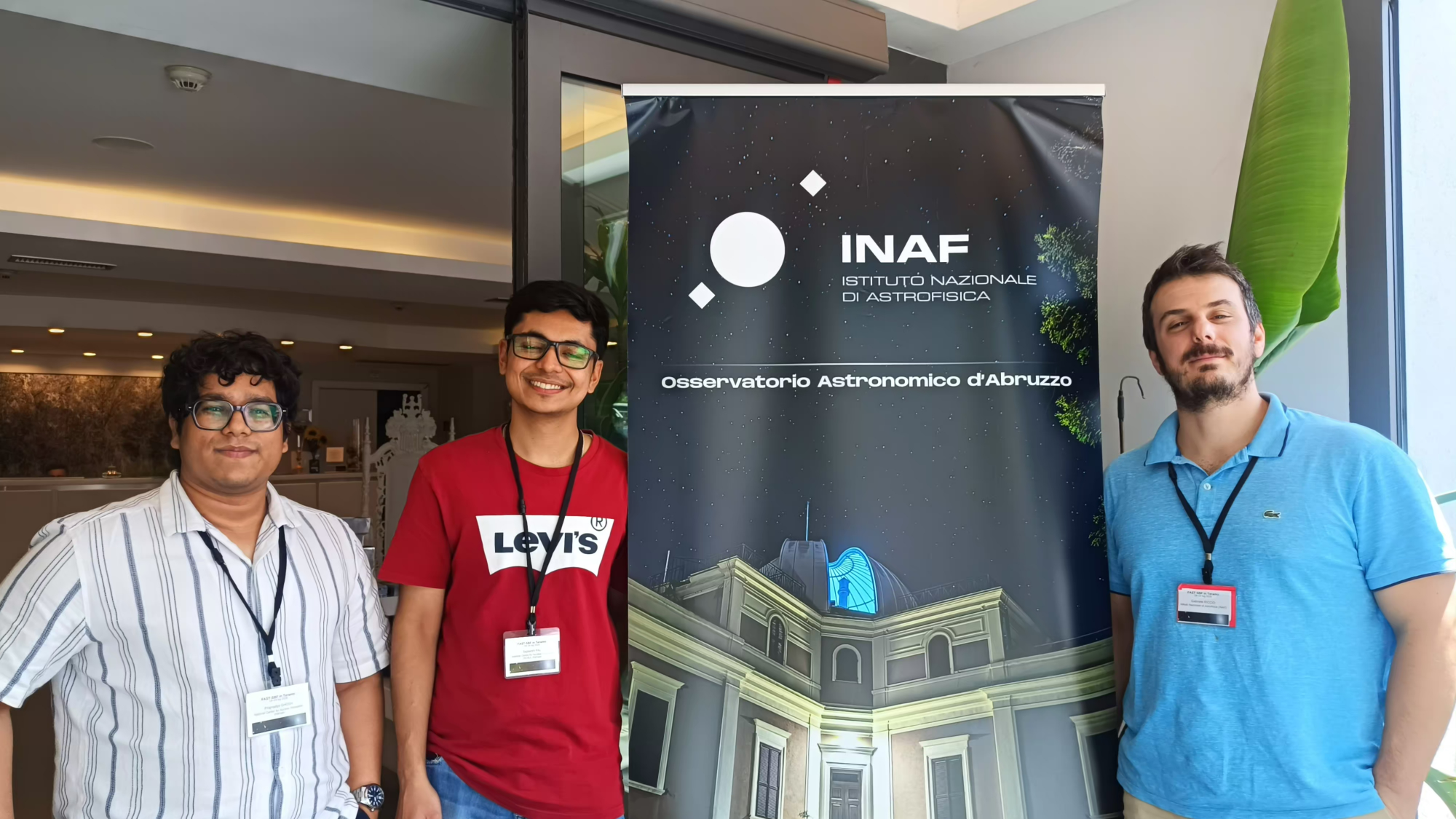
Teramo, Italy
20-23 July 2026
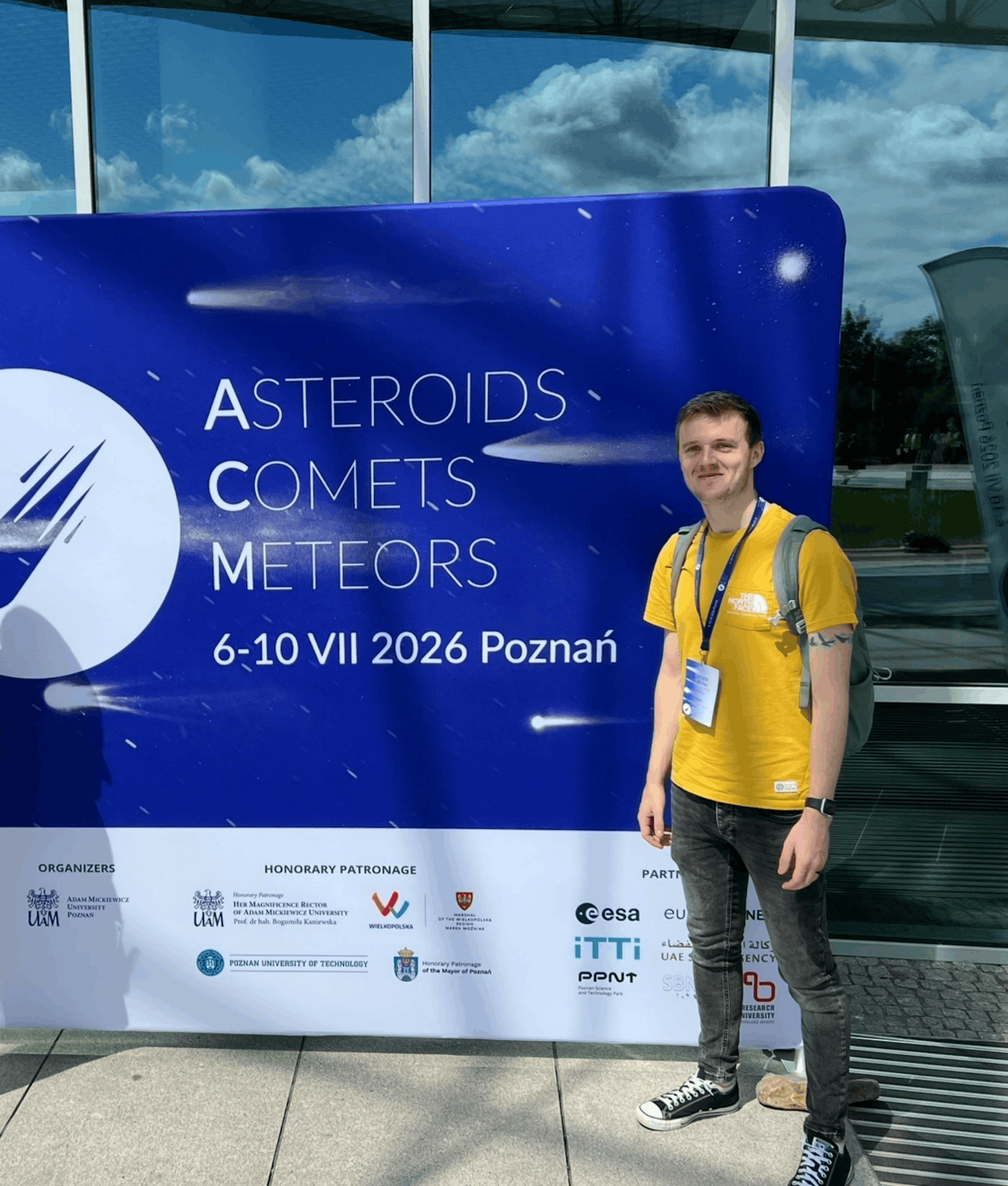
Poznań, Poland
6-10 July 2026
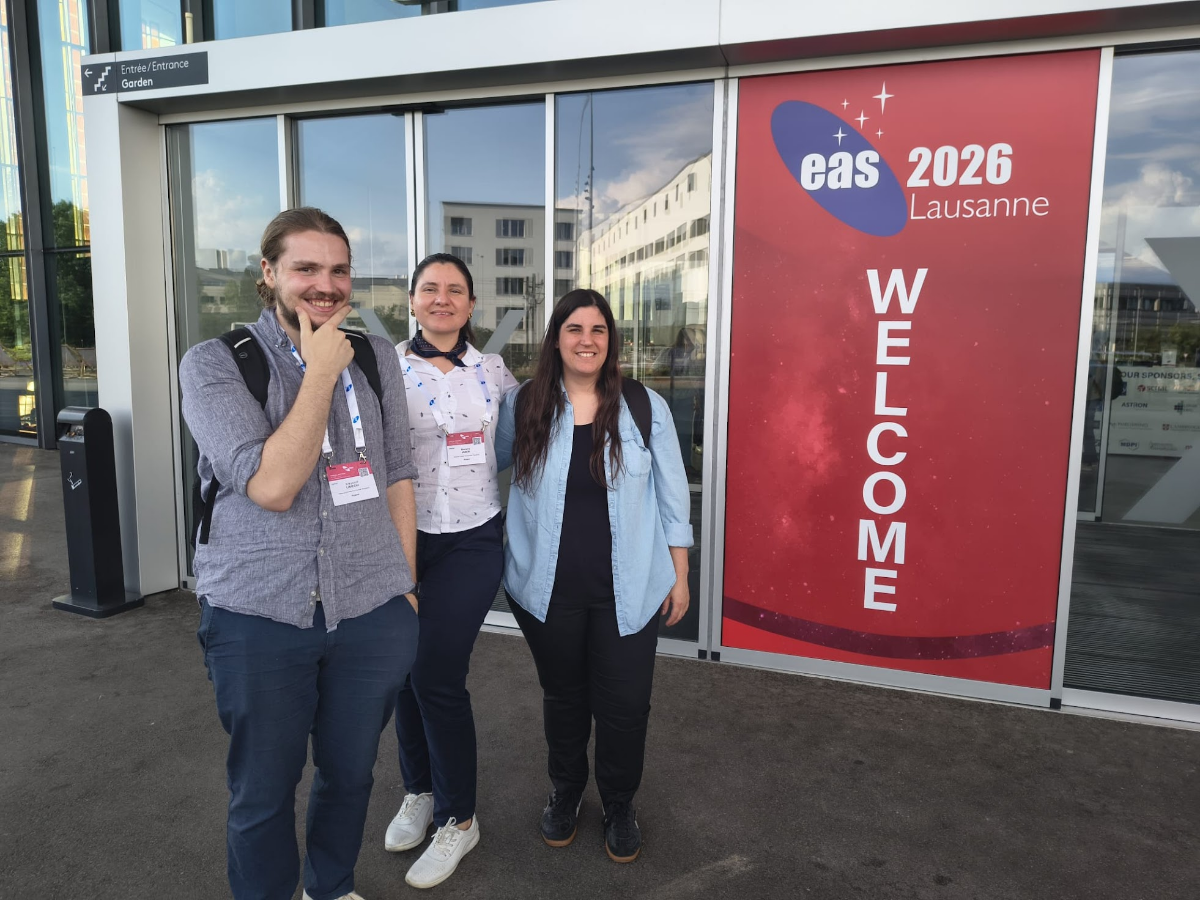
Lausanne, Switzerland
29 June - 3 July 2026
Latest News
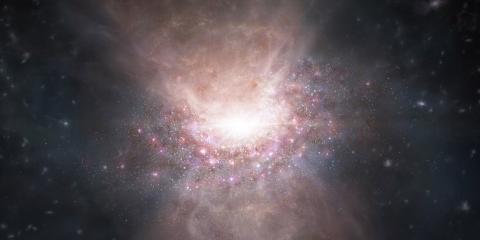
Gas on the run – ALMA spots the shadow of a molecular outflow from a quasar when the Universe was less than one billion years old
Theoretical predictions have been confirmed with the discovery of an outflow of molecular gas from a quasar when the Universe was less than a billion years old. The results obtained from the observations of the ALMA telescope are of great importance for understanding the processes of star formation in galaxies. Dr. Darko Donevski from the NCBJ Astrophysics Division participated in the work of the research team.
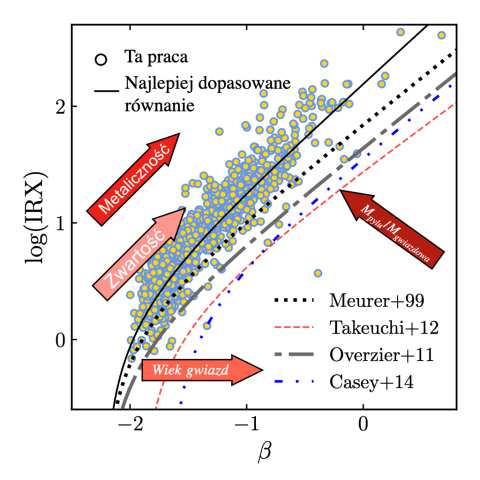
Midlife Crisis of the Universe: Galaxies’ interactions did not affect interstellar dust
A new study has shed light on the intricate cosmic dance between interstellar dust in galaxies, properties of galaxies, and their environments. For a very long time, the relations between dust and the galaxies was investigated. However, the link between dust properties and the neighborhood of galaxies was poorly understood. In the newest work published in Astronomy&Astrophysics, the scientists studied the relationship between the amount of stellar light absorbed by dust, and the environments of galaxies.
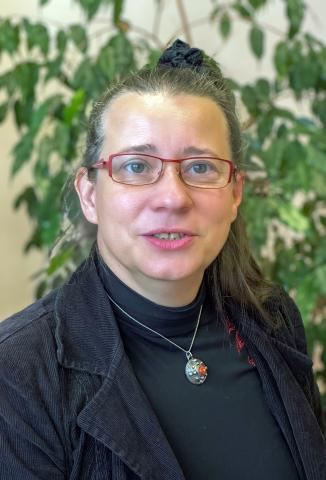
Professor Agnieszka Pollo has taken the position of Deputy Director for Science at NCBJ
On October 16, 2023, a change took place in the position of Deputy Director for Science at NCBJ. The former director, Professor Ewa Rondio, passed on her duties to Professor Agnieszka Pollo, an astrophysicist who has been successfully leading the rapidly developing Department of Astrophysics.
![Zdjęcie: Artystyczna interpretacja odpływów galaktycznych. Aktywność gwiazdotwórcza może skutkować powstawaniem potężnych wiatrów (odpływów), które są w stanie przenosić gaz na bardzo duże odległości, aż do przestrzeni międzygalaktycznej. Linie emisyjne [CII] 158 μm wyraźnie wskazują na odpływ gazu atomowego. Źródło: ESA/Hubble, ESO/L. Calçada, M. Romano.](/sites/default/files/styles/large/public/2023-10/press_image_pol.png?itok=90m0Frbx "Zdjęcie: Artystyczna interpretacja odpływów galaktycznych. Aktywność gwiazdotwórcza może skutkować powstawaniem potężnych wiatrów (odpływów), które są w stanie przenosić gaz na bardzo duże odległości, aż do przestrzeni międzygalaktycznej. Linie emisyjne [CII] 158 μm wyraźnie wskazują na odpływ gazu atomowego. Źródło: ESA/Hubble, ESO/L. Calçada, M. Romano.")
Galactic outflows drive the evolution of dwarf galaxies
Stellar feedback is expected to play a key role in regulating the evolution of low-mass galaxies by producing galactic-scale winds (also known as outflows) that push the gas away from the interstellar medium, eventually preventing from the formation of new stars. In this respect, an international team of astronomers led by NCBJ scientist, have published a work on the Astronomy & Astrophysics journal addressing the impact of galactic outflows on the baryonic cycle of nearby dwarf galaxies
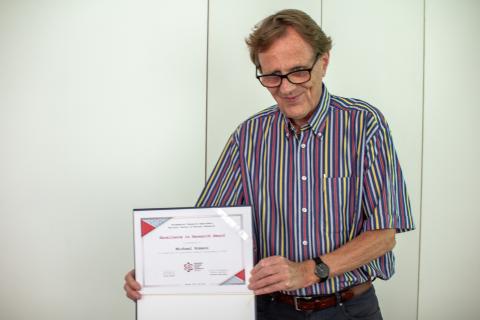
Annual Awards Presented by the Fundamental Research Department of NCBJ
On June 26, 2023, a Special Colloquium was held, during which awards were presented for the best research and popularization activities in 2022 at the Fundamental Research Department. The winners were Prof. Michał Bluj, a team consisting of Prof. Paweł Ziń and Dr. Maciej Pylak, Dr. Michael Romano, and Prof. Jerzy Kowalski-Glikman and Dr. Miguel Figueira
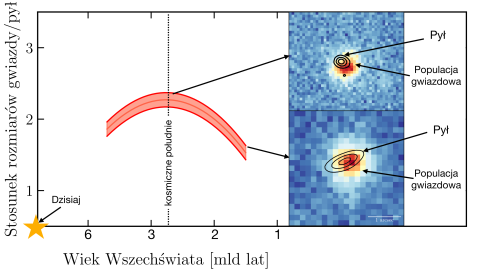
Unveiling the hidden stars: ALMA Shines a Light on Dust Attenuation
Interstellar dust is a key component in galaxies. It favors star formation and drives the chemistry and physics of the interstellar medium. However, it hides the majority of stars in a way that it is impossible to observe them. Astrophysicists use dust attenuation laws that would uncover these hidden stars by reverse-engineering the light from galaxies to quantify how many stars are there.