English
 Polish
NCBJ's astrophysical research spans a broad spectrum, encompassing observational cosmology, astrophysics, cosmic ray physics, and theoretical studies of cosmological models and gravity. Through participation in the VIPERS and VVDS projects, NCBJ scientists explore the large-scale structure of the Universe and the formation of galaxies. The AKARI and Planck projects allow them to study the cosmic infrared background and the cosmic microwave background, respectively, providing insights into the early Universe. In the domain of observational astrophysics, NCBJ works with the LIGO-Virgo collaboration to detect and analyze gravitational waves, which are ripples in spacetime caused by cataclysmic astronomical events. In addition, NCBJ is involved in cosmic ray physics through the JEM-EUSO experiment, investigating the nature and origins of ultra-high-energy cosmic rays. On the theoretical front, researchers at NCBJ engage in developing cosmological models that explain the evolution and behavior of the Universe and delve into classical and quantum gravity theories to understand the fundamental forces that shape the cosmos.
NCBJ conducts fundamental research, both experimental and theoretical, in the realms of elementary particle and nuclear physics, and astrophysics. The center is an active participant in international collaborations, such as those at CERN's Large Hadron Collider, with a focus on fundamental interactions, neutrino research, and on elucidation of hadron structures. NCBJ's research also extends to the investigation of the Universe's large-scale structures, quantum gravity, cosmic radiation, and the probing of the enigmas of dark matter and dark energy.
In the field of nuclear physics, both experimental and theoretical research is conducted on various aspects. This includes studying the structure and properties of atomic nuclei, with a specific focus on the synthesis and stability of heavy nuclei. Researchers also investigate nucleon excitations, spin structure, the permanent electric dipole moments of protons and deuterons, and the mechanisms of nuclear reactions. The properties of the quark-gluon plasma produced in high-energy collisions of the heaviest nuclei are also studied. Additionally, part of the research involves the design and construction of detectors for nuclear physics. The application of nuclear methods in materials studies and in the biological domain is also explored.
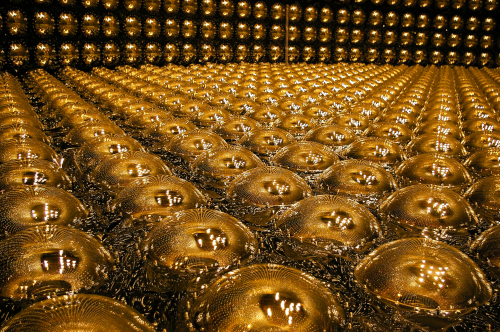
NCBJ is actively involved in particle physics research and neutrino studies. The theoretical division delves into the interactions and structures of hadrons using Quantum Chromodynamics (QCD), and also explores physics beyond the Standard Model. In the realm of experimental physics, scientists from NCBJ collaborate in various experiments at CERN. Within the CMS experiment, they investigate the properties of the Higgs boson and are on the lookout for new physics. Through participation in the LHCb and ALICE experiments, they study CP symmetry violation in quark decays and analyze the behavior of matter produced in nucleus-nucleus collisions. Furthermore, they probe the structure of nucleons and conduct hadron spectroscopy in the COMPASS experiment. NCBJ also has a strong footing in neutrino research, with a focus on neutrino oscillations in the T2K experiment. It is engaged in neutrino astrophysics and the quest for dark matter through the Super-Kamiokande, as well as contributing to the innovative Hyper-Kamiokande project.