English
 Polish
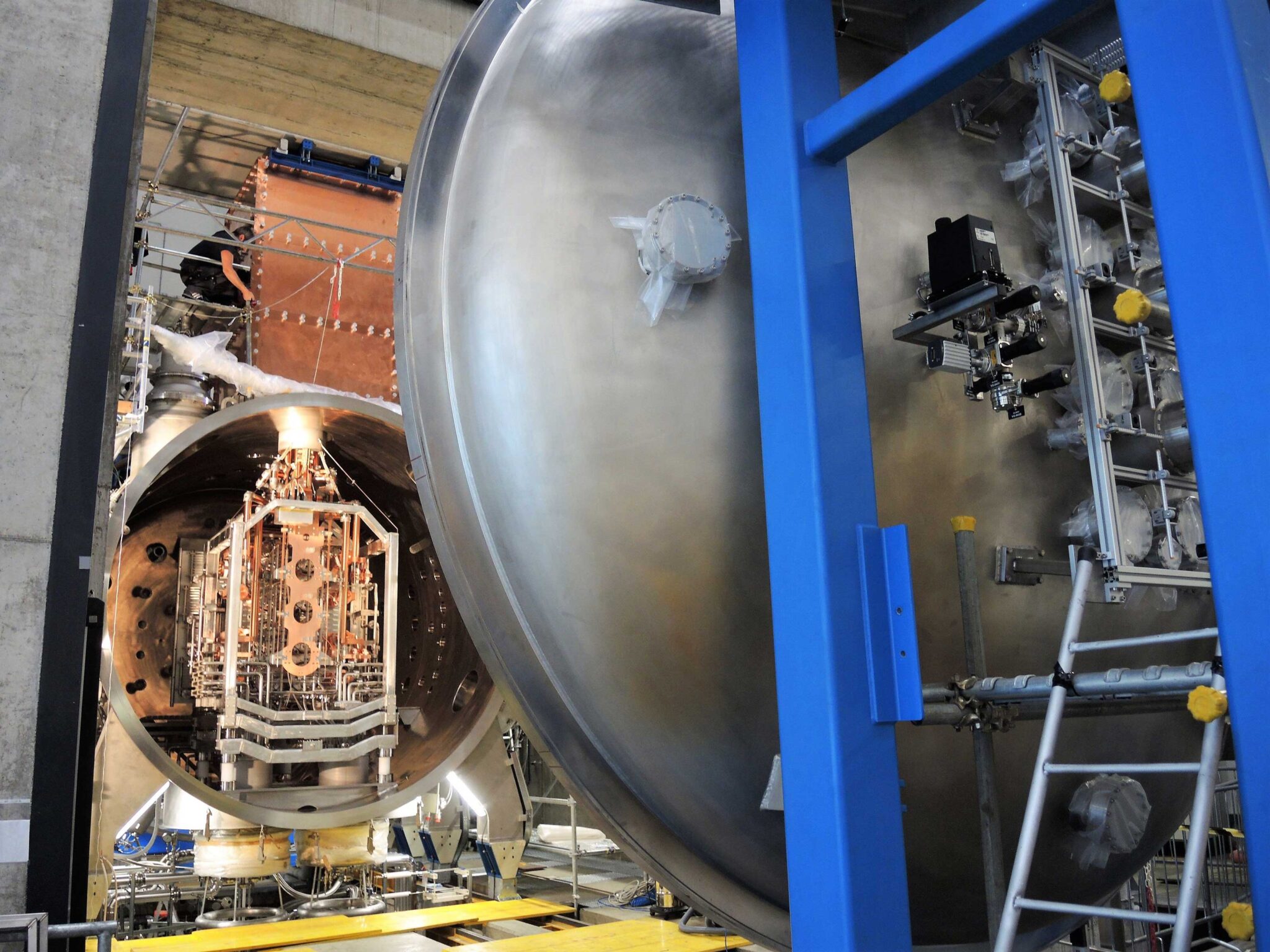
NCBJ is developing a numerical model of the ion source for the ITER plasma heating system
05-08-2026
Scientists from the National Centre for Nuclear Research are participating in the development of an advanced numerical model of the negative ion source used in the SPIDER experiment. The SPIDER facility is a full-scale prototype of an ion source for the Neutral Beam Injection (NBI) system, which will be responsible for heating the plasma in the ITER experimental fusion reactor. The results of the latest research have been published in the journal Plasma Physics and Controlled Fusion.
This article is the result of research carried out as part of the project “NCBJ’s contribution to the Agreement on the construction of a prototype atomic beam plasma heating device (NBTF) between the ITER Organisation (IO) and the RFX Consortium”. One of the key tasks undertaken by the NCBJ team is the development of the two-dimensional fluid model FSFS2D, which describes the processes occurring in the negative ion source of the SPIDER experiment.
The research is of significant importance for the development of thermonuclear fusion technology, as it enables more accurate modelling and optimisation of the processes occurring in large-scale negative ion sources used in neutral beam injection (NBI) systems. NBI systems are among the fundamental methods for plasma heating in fusion experiments, such as ITER, and will play an equally important role in future fusion power plants.
– Developing a reliable numerical model enables a better understanding of the transport of particles and energy within the ion source, and allows us to predict the impact of operating parameters on the efficiency of negative ion production and extraction. This tool enables the optimisation of the design and operating conditions of NBI systems without the need for costly experimental studies – explains Prof. Roman Zagórski, from the Radiation Detectors and Plasma Diagnostics Division in the Department of Nuclear Techniques and Equipment at the National Centre for Nuclear Research (NCBJ), the lead author of the publication.
In the presented work, the capabilities of the FSFS2D model were extended by incorporating energy equations for all plasma components. This made it possible to determine the temperature distributions of electrons, positive and negative ions, and atomic and molecular hydrogen, as well as to carry out a quantitative analysis of energy exchange between individual plasma components. The model was verified by comparing the calculation results with available experimental data obtained on the SPIDER device.
These studies represent the next stage in the development of the FSFS2D model. Future work will focus on incorporating a more advanced description of the transport of heavy plasma components and refining the model of surface H⁻ ion production on the plasma grid. This tool will aid in the interpretation of experimental results from the SPIDER facility and the optimisation of NBI systems designed for ITER and future fusion reactors.
The research is presented in the publication: Roman Zagorski et al., Effect of Neutral and Ion Temperatures in the 2D Fluid Model of the RF-Heated SPIDER Ion Source, Plasma Phys. Control. Fusion 68 075033, DOI: 10.1088/1361-6587/ae7f4f.