English
 Polish
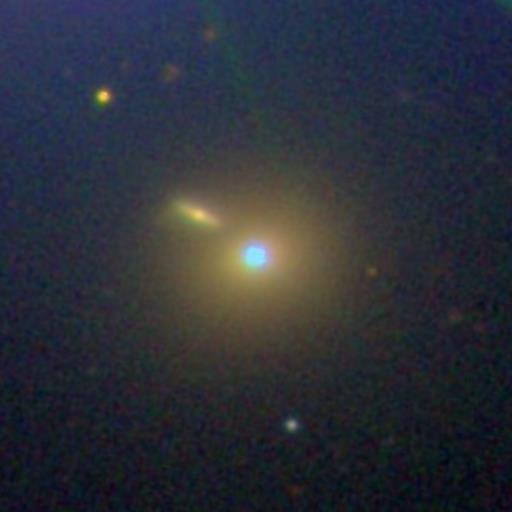
Professor Biesiada is testing one of the most important principles of Einstein’s theory
18-05-2026
An international team of researchers, including Prof. Marek Biesiada of the National Centre for Nuclear Research and dr Aleksandra Piórkowska-Kurpas of the University of Silesia in Katowice, has conducted one of the most precise studies to test the so-called weak equivalence principle — a cornerstone of Albert Einstein’s general theory of relativity.
The results are described in the paper “Testing the Weak Equivalence Principle with IceCube Events and Blazars” by Tian-Cong Wang, Aleksandra Piórkowska-Kurpas, Marek Biesiada and He Gao, published on 7 April 2026 in The Astrophysical Journal Letters. DOI: 10.3847/2041-8213/ae5626.
The weak principle of equivalence states that all objects — regardless of their structure or nature — should fall in a gravitational field in the same way. It is on this principle that Einstein’s theory is based, describing gravity as a curvature of space-time.
Scientists investigated whether this principle also applies to the most extreme particles in the Universe — high-energy neutrinos and gamma-ray photons reaching Earth from distant active galaxies known as blazars.
– Neutrinos are almost invisible elementary particles that interact very weakly with matter and can pass right through entire planets. Gamma-ray photons, on the other hand, are the most energetic form of electromagnetic radiation. Both types of particle can travel billions of light-years, carrying information about the most violent phenomena in the Universe – says Prof. M. Biesiada.
The researchers used data from the IceCube Neutrino Observatory, which detects high-energy neutrinos from space. They analysed neutrinos associated with gamma-ray bursts emitted by two distant blazars — extremely active galaxies with supermassive black holes at their centres.
The aim of the study was to determine whether neutrinos and photons travelling across vast cosmic distances respond to gravity in exactly the same way. If they were to reach Earth in a manner that deviated from the predictions of the theory of relativity, this could mean that current physical theories would need to be revised.
The analysis utilised the so-called Shapiro delay, an effect predicted by the theory of relativity. This effect arises because strong gravitational fields warp spacetime and can cause a slight delay in the journey of particles travelling through the Universe. In this study, when examining the travel times of neutrinos and gamma-ray photons, the Shapiro effect arising from a large-scale structure known as Laniakea was taken into account. This is one of the largest known superclusters of galaxies, which includes our Milky Way and the Solar System.
The results showed that any differences in the behaviour of neutrinos and photons under the influence of gravity are less than one in a hundred million. This means that the weak equivalence principle has been confirmed with an accuracy of up to 10⁻⁸ — significantly better than in many previous astrophysical studies.
The contribution of researchers from the NCBJ included the astrophysical analysis of the data, modelling of Laniakea’s gravitational effects, and the interpretation of the results in the context of the theory of relativity and fundamental physics.
The study is significant not only for astrophysics, but for all of modern physics. The general theory of relativity is the basis for GPS technology, modern cosmology, and research into black holes and gravitational waves. Any increasingly precise confirmation or invalidation of its assumptions could lead to the discovery of new physics that goes beyond the current model describing the Universe.
The authors emphasise that the development of new neutrino and gamma-ray observatories will allow for even more precise testing of the fundamental laws of nature in the future. Upcoming instruments, such as the Cherenkov Telescope Array Observatory and KM3NeT, may mark a new stage in research into gravity and the structure of the Universe.