English
 Polish
NAHEPaM – Knowledge and Experience Transfer During Workshops in Kiel
04-09-2026
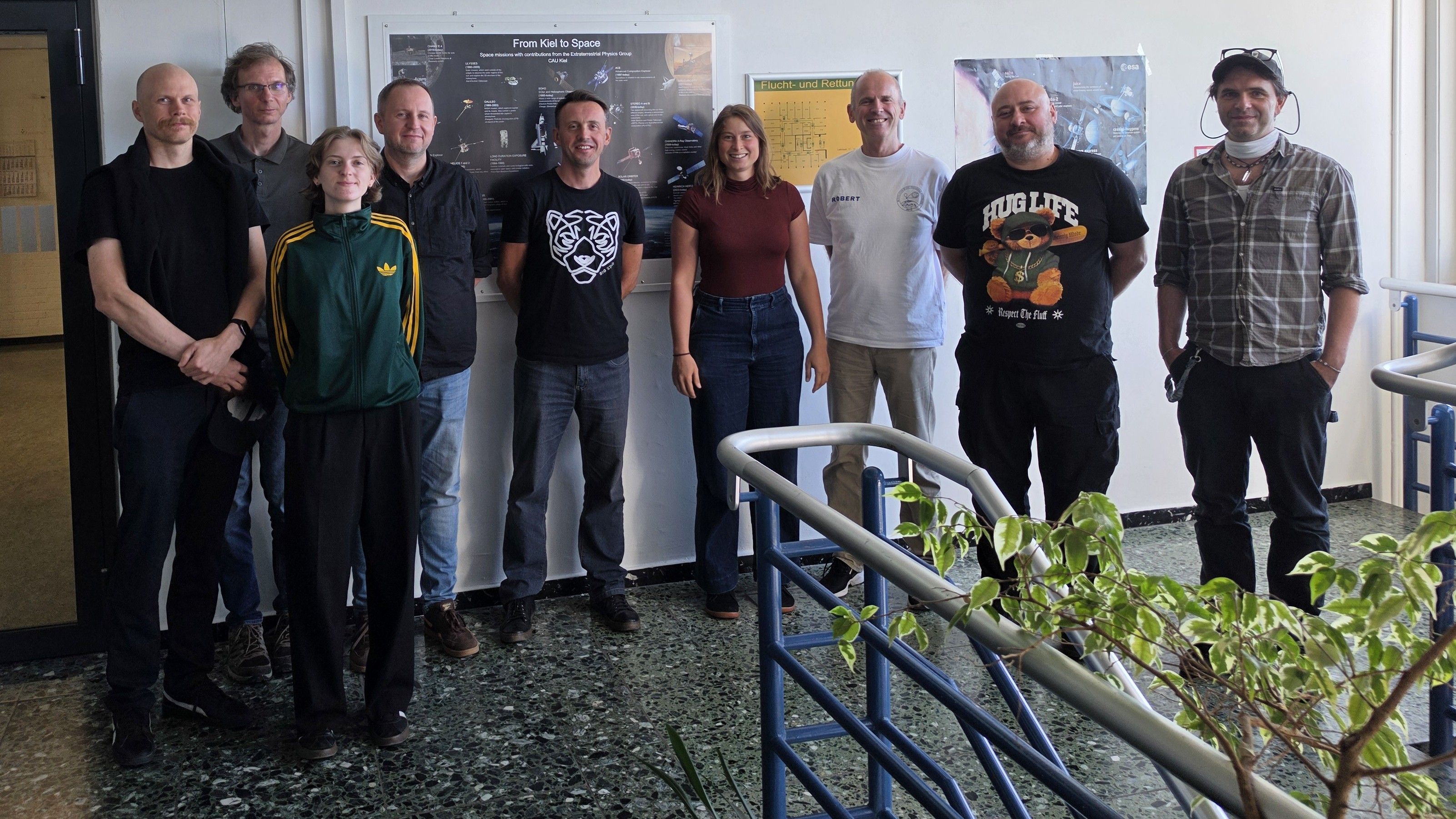
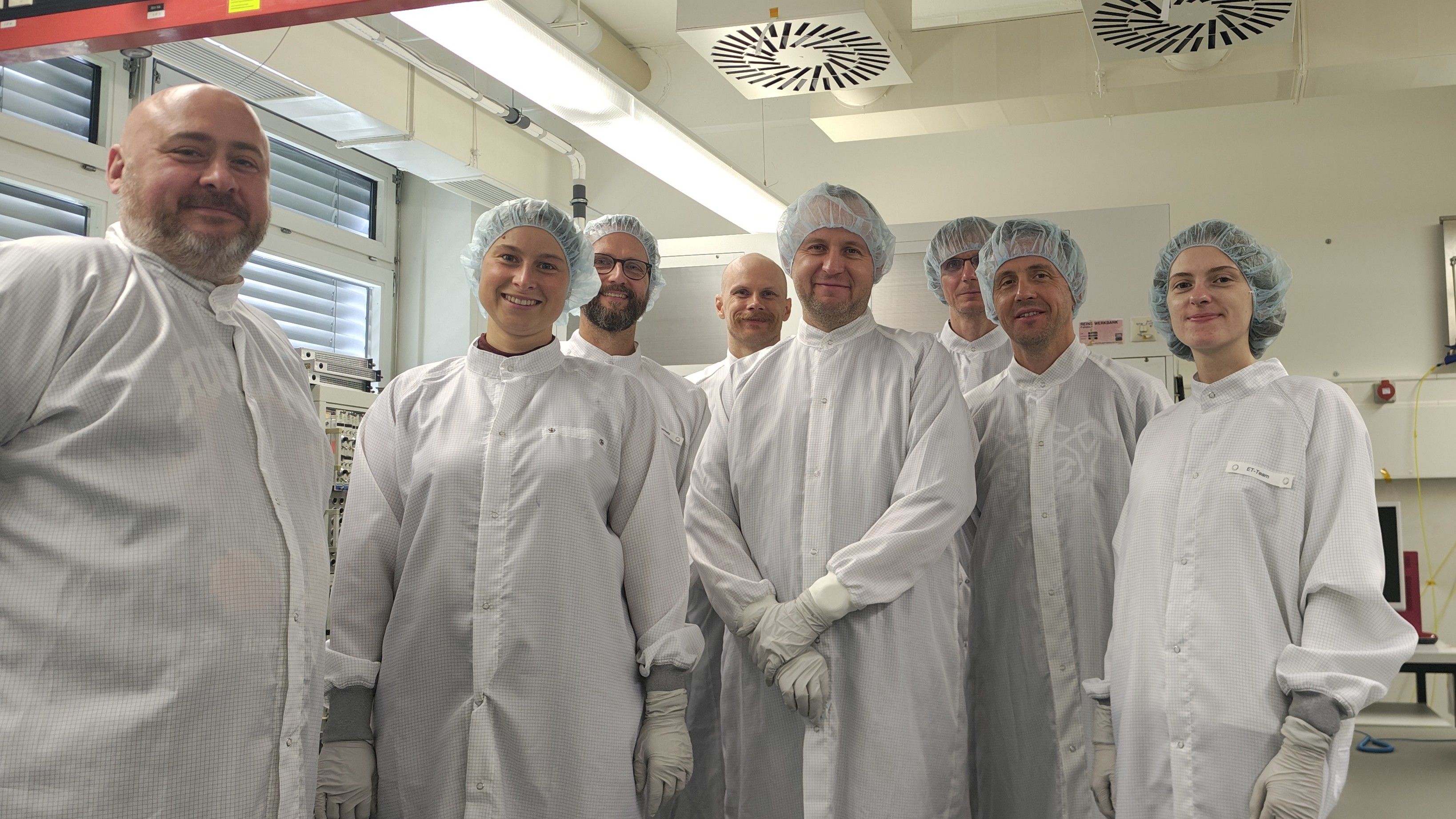
On August 25–27, 2026, representatives of the National Centre for Nuclear Research and the Nicolaus Copernicus Astronomical Center of the Polish Academy of Sciences participated in the NAHEPaM project workshops, organized at Christian Albrecht University in Kiel (CAU Kiel).
The NAHEPaM (NewATHENA High-Energy Particle Monitor) instrument is a project being developed for the future NewATHENA mission carried out by the European Space Agency (ESA). The NewATHENA space telescope will be one of the largest scientific observatories studying the Universe in the X-ray range. The task of the NAHEPaM monitor, which is being built in Poland, will be to measure the flux of high-energy particles, which will allow for the determination of the X-ray background level and increase the accuracy of astrophysical observations conducted by the WFI and X-IFU detectors (scientific instruments of the NewATHENA telescope).
At the invitation of Prof. Robert Wimmer-Schweingruber’s team, the NCBJ was represented at the workshop by Dominik Rybka, Tomasz Szczęśniak, Piotr Mazerewicz, and Roch Kwiatkowski, while CAMK PAN was represented by Rafał Wojaczyński and Zuzanna Bielecka.
The main goal of the workshop was to transfer the knowledge and experience of the team from Kiel, which had participated in developing the initial concept for the instrument. During three intensive working days, the participants jointly analyzed existing solutions and the most important challenges related to the further development of the NAHEPaM monitor.
During the workshop, participants visited the laboratories at CAU Kiel, which allowed them to familiarize themselves with the research facilities and practical solutions used in the construction and testing of space equipment.
The valuable experience gained by the group from Kiel will certainly be put to use in the construction of the monitor. Thanks to this experience, it will be possible to identify the most important technical challenges and determine the direction of further work on the NAHEPaM instrument being carried out by the Polish consortium.